7 Tips for Choosing a Fancy Yarn Making Machine?

Choosing a fancy yarn making machine is not simply a matter of comparing speed, price, or catalogue photographs. The machine must match your fibre mix, yarn structure, production scale, and finishing expectations. Metallic effects, bouclé loops, slubs, chenille surfaces, and recycled fibres each place different demands on feeding control and tension stability. A beautiful sample can hide uneven twist, excessive waste, or difficult maintenance.

Industry data makes careful selection more important. The ITMF International Textile Machinery Shipment Statistics 2023 reported a 1.8% decline in new short-staple spindle shipments and a 37% fall in open-end rotor shipments. These figures suggest cautious investment and stronger pressure to justify every machine purchase. Textile Exchange’s Materials Market Report 2024 also recorded recycled fibres as a growing part of global fibre use, although implementation remains uneven. Your machine should therefore handle future materials, not only today’s favourite yarn.

Dr. Seshadri Ramkumar, a recognised textile materials researcher, has stated, “Sustainability is not a choice anymore; it is a necessity.” That principle belongs beside productivity calculations. The right fancy yarn making machine should reduce fibre loss, simplify changeovers, and deliver repeatable texture across batches. Ask for test production with your actual fibres. Request noise, energy, maintenance, and rejection data. Check the details.

These seven practical tips examine machine compatibility, control systems, output stability, operator safety, technical support, energy use, and total ownership cost. The choice may still involve compromise. That is normal. A lower-priced machine can become expensive when every textured cone needs correction.
7 Tips for Choosing a Fancy Yarn Making Machine?

Define the Fancy Yarn Type Using Count, Twist, and Ply Data

Choosing a fancy yarn making machine starts with defining the yarn, not admiring the machine’s appearance. Yarn count, twist, and ply determine how fibers behave during production. They also influence texture, strength, weight, and machine compatibility.

Yarn count describes thickness. A finer count usually needs accurate tension control, while a heavier count may require stronger feeding parts. Twist shows how tightly fibers wrap or bind. Low twist creates softness and volume, but excessive looseness can cause shedding. High twist improves stability, yet may reduce the desired fluffy effect. Ply indicates how many strands combine. Two-ply yarn often gives balance, while multi-ply structures can create richer patterns and better durability.

Tip: Write the target count, twist range, and ply structure before comparing machines. Request a small trial using your actual fibers. Measure the finished yarn after conditioning, because moisture can change its size and handle. Check whether the machine allows separate control of feeding speed, twisting speed, and winding tension. These details matter more than a long feature list.

In practice, I would test several samples under identical settings. Record breakage, uneven slubs, and surface hairiness. A machine may perform well with one fiber and poorly with another. This is where my own judgment can be imperfect. Some attractive samples fail after washing or weaving. Leave room for adjustment, and treat early results as evidence, not proof. A reliable supplier should provide technical data, operating guidance, and repeatable test results.

Compare Machine Systems for Core, Effect, and Covering Yarns

7 Tips for Choosing a Fancy Yarn Making Machine?

Compare machine systems before comparing prices. Core-yarn machines need stable drafting, accurate tension, and reliable filament feeding. Effect-yarn systems require flexible speed control for slubs, loops, or color changes. Covering machines depend on spindle balance and consistent filament overlap. The right system should match your yarn structure, not simply your target output.

Tip 1: Test your actual fibers.

Textile Exchange’s Materials Market Report 2024 estimates global fiber production reached 124 million tonnes in 2023. Recycled and blended fibers are increasing, but they can behave differently during drafting. Ask suppliers for trial cones, breakage records, and CV measurements. A glossy sample can hide poor running performance.

Tip 2: Compare waste, energy, and changeover time.

ITMF’s 2023 machinery statistics recorded about 8.5 million short-staple spindles shipped worldwide, showing strong investment in spinning capacity. However, higher capacity does not guarantee better fancy yarn quality.

Tip 3: Inspect the control system closely.

Check tension response, splice consistency, and operator access.

Tip 4: Measure noise and heat near the spindle.

Tip 5: Request data at your planned production speed.

Tip 6: Calculate maintenance hours, not only purchase cost.

Tip 7: Leave room for manual adjustment.

Automation helps, but it is not perfect.

My own comparison would include at least three yarn constructions, because one successful trial can be misleading.

Match Production Speed, Typically 100–300 m/min, to Your Output

7 Tips for Choosing a Fancy Yarn Making Machine?

Match Production Speed, Typically 100–300 m/min, to Your Output

Production speed should match your real order volume, not the largest number on a brochure. A machine running at 300 m/min may seem attractive, but frequent color changes, yarn effects, and cleaning reduce usable output. In one production review, the planned speed looked sufficient. The actual hourly output was lower because setup took longer than expected.

Calculate output from running hours, machine efficiency, and planned waste. For example, a 200 m/min setting can produce strong results during steady operation. However, delicate fibers may require slower speeds to prevent uneven tension or broken threads. Speed is not everything. Ask for trial data using your intended fiber blend and yarn structure.

Check whether the control system allows gradual speed changes. Smooth acceleration protects the yarn and helps operators correct irregular feeding. Review maintenance records, spindle access, sensor accuracy, and spare-part availability. These details affect production more than a high maximum speed. Test before committing. A short factory trial can reveal vibration, heat buildup, and tension problems that specifications may not show.

Your target should be stable output with repeatable quality. It may be wiser to operate at 160 m/min consistently than chase 300 m/min with frequent stoppages. Reconsider the calculation after testing, because real production rarely follows the ideal plan.

7 Tips for Choosing a Fancy Yarn Making Machine? — Match Production Speed, Typically 100–300 m/min, to Your Output

Tip Selection Dimension Typical Data or Range How to Evaluate It Practical Recommendation
1 Match machine speed to required output 100–300 m/min Estimated daily production = speed × 60 × operating hours × efficiency ÷ 1,000. At 200 m/min, 16 operating hours, and 85% efficiency, the theoretical length is approximately 163.2 km/day. Select a machine whose normal working speed covers your target output without requiring continuous operation at its maximum rated speed.
2 Check the suitable yarn construction Common fancy-yarn structures include slub, boucle, chenille, core-spun, wrapped, and effect yarns. Each structure requires different drafting, feeding, twisting, looping, or wrapping control. A machine designed for one effect may not produce another effect consistently. Confirm the machine’s supported yarn constructions, number of feeding positions, twist direction, and compatibility with the fibers used in your product range.
3 Evaluate speed stability and control accuracy Compare low-speed starting, acceleration, deceleration, and continuous running performance across the intended operating range. Stable delivery speed helps maintain repeatable slub length, loop size, wrapping density, and twist. Sudden speed variation can create visible faults and waste. Request a trial using the actual base yarn and effect yarn. Review yarn appearance at both the lower and upper ends of the planned speed range.
4 Calculate productivity using realistic efficiency A planning efficiency of approximately 75–90% is commonly used for production estimates, depending on yarn type, changeovers, cleaning, and stoppages. Example: 250 m/min × 60 × 20 h × 80% = 240 km/day. The result is a planning estimate, not a guaranteed output. Include setup time, package changes, doffing, maintenance, yarn breaks, quality checks, and material shortages when calculating the required number of machines.
5 Verify yarn and package compatibility Check the acceptable yarn count range, fiber type, feed-package dimensions, winding package size, and maximum package weight specified by the machine design. Fine, bulky, elastic, hairy, or recycled fibers can behave differently during feeding and twisting. Incorrect package geometry may increase tension variation and stoppages. Test the actual raw materials, including natural, synthetic, blended, and recycled fibers, before confirming the machine configuration.
6 Assess changeover time and flexibility Important factors include recipe storage, electronic tension settings, adjustable feeding ratios, quick-access guides, and tool-free or simplified adjustments. For multiple colors or small production lots, changeover time can reduce effective output more than the difference between two nominal machine speeds. Prefer a configuration that allows repeatable digital settings and fast cleaning when the product range includes several fancy-yarn designs.
7 Compare energy, maintenance, and quality-control needs Review motor power, compressed-air requirements, lubrication points, spare-part access, sensor coverage, noise level, and waste collection arrangements. Total operating cost depends on energy use, labor, consumables, downtime, waste, and maintenance—not only the purchase price or maximum speed. Compare the estimated cost per kilogram or per kilometer of saleable yarn, and select a machine with accessible maintenance points and measurable fault monitoring.
Planning note: Output figures should be validated with a production trial. A useful calculation is: net length (km) = machine speed (m/min) × 60 × operating hours × efficiency ÷ 1,000. Convert length to mass only after confirming the yarn count and the actual yarn structure.

Evaluate Fiber Compatibility Across 0.5–30 mm Staple Lengths

Choosing a fancy yarn making machine starts with fiber compatibility, not decorative effects. Staple lengths from 0.5 to 30 mm can behave like entirely different materials. Short fibers often need controlled airflow, gentle feeding, and precise binding. Long fibers usually require stable drafting and enough space between rollers.

Test the full range with small, documented samples. A 0.5 mm fiber may collect around feed zones or escape through gaps. A 30 mm fiber can wrap around rollers when tension is too low.

Short fibers behave differently. Measure the waste. Record slippage, uneven thickness, surface fuzz, and yarn breakage at several machine speeds. A quiet trial at low speed may hide problems during continuous production.

Do not trust length alone. Ask for the machine’s tested fiber range, recommended moisture conditions, feed settings, and maintenance limits. Check whether the drafting system supports single fibers, blends, recycled material, or delicate natural fibers.

My first trial once passed a short laboratory test, yet failed after an hour because heat changed the fiber grip. That mistake was avoidable.

Repeat testing with real production humidity, operator adjustments, and the intended twist level. Also inspect the yarn under magnification. Visible knots may look attractive, but weak binding can cause serious downstream breaks. A reliable machine should offer repeatable results, accessible adjustments, and clear technical records rather than impressive samples alone.

Verify Energy Use, Automation, and ±1% Tension Control Accuracy

7 Tips for Choosing a Fancy Yarn Making Machine?

Energy use should be measured, not guessed from a brochure. During a trial, connect a calibrated power meter to the machine. Record consumption during startup, normal production, and idle periods. A machine that saves power only while idle may disappoint during continuous operation. Check heating zones, motors, and compressed-air demand separately. Small leaks can become expensive.

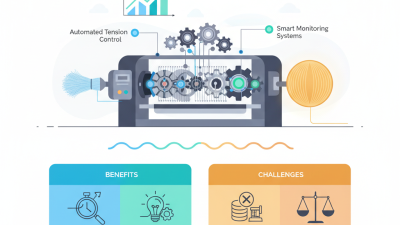
Automation matters when yarn patterns change often. Look for automatic tension adjustment, yarn-break detection, recipe storage, and simple alarm records. Operators should correct problems without opening complex panels. Ask for a live demonstration using your intended fibers. Synthetic, elastic, and delicate yarns can behave very differently. The interface may look impressive but still confuse a tired operator.

Tension control deserves harder proof. Request test data showing whether the machine maintains ±1% accuracy across several speeds and yarn types. Confirm the measuring position, sampling time, and calibration method. A displayed value is not enough. Place an independent tension sensor near the winding point during testing. In practical trials, short spikes sometimes appear during acceleration. That detail should not be hidden. I would also inspect finished cones for loose edges, uneven density, and color variation. Perfect specifications can still meet imperfect materials. Ask how often sensors require calibration, and who performs it. Reliable records matter more than confident promises.

7 Tips for Choosing a Fancy Yarn Making Machine

Verification benchmarks for energy use, automation, and tension control accuracy

Compare machines using measurable acceptance criteria: record electricity consumption in kWh per kilogram of finished yarn, verify automated functions during a complete production cycle, and confirm that yarn tension remains within ±1% of the setpoint under stable operating conditions. Actual results should be validated with an on-site trial using the intended yarn structure and production speed.