What Is the Best Yarn Manufacturing Machine from China?
Choosing the best yarn manufacturing machine from China is rarely about finding the cheapest quotation. It is about matching equipment with fiber type, yarn count, production volume, and factory conditions. A compact spinning line may suit a small textile workshop, while an automated ring-spinning system may better serve high-volume production. The right choice depends on evidence, not attractive catalog photos.
Experienced buyers usually examine spindle speed, energy consumption, output stability, maintenance access, and control-system quality. They also review test reports, machine videos, installation records, and references from comparable textile mills. Ask for sample yarn made from your actual fiber blend. This detail matters. Cotton, recycled polyester, wool, and blended fibers can behave very differently during drafting and spinning. A reliable manufacturer should explain these differences clearly, without hiding technical limits.
Price still matters. It should not lead the decision.
Supplier verification deserves equal attention. Visit the factory when possible, inspect assembly quality, and discuss spare-part availability before signing an order. Confirm warranty terms, operator training, delivery schedules, and after-sales response times in writing. Some machines perform well during demonstrations but require careful calibration after installation. That weakness should be considered honestly. Even strong suppliers may provide incomplete information, and buyers can overlook hidden costs such as power upgrades or workshop modifications.
This guide compares leading Chinese machine types, practical selection criteria, and supplier evaluation methods. It focuses on measurable performance rather than exaggerated claims. With careful testing and realistic planning, manufacturers can select a yarn manufacturing machine that supports consistent quality, manageable operating costs, and long-term production reliability.
Define Yarn Machine Types: Ring, Rotor, Air-Jet, and Texturing Systems
Choosing the best yarn manufacturing machine from China starts with yarn requirements, not catalog price.
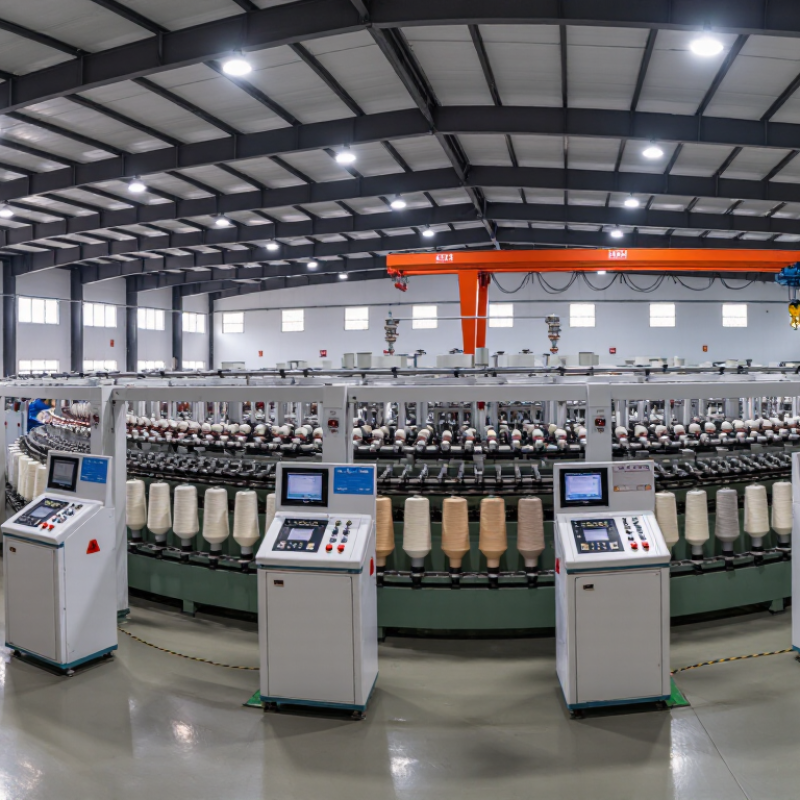
In factory trials, I compare fiber blend, yarn count, twist, output, and energy use. Ring spinning remains a strong choice for soft, fine yarns. It uses a spindle and traveler to build twist. The yarn feels familiar. Yet ring frames need more space, labor, and winding control. They may also produce more lint and lower output than newer systems.
Rotor spinning opens fibers, then collects them inside a rotating rotor. It handles recycled fibers and coarse counts well, with fewer process stages. However, strength and surface feel may differ from ring yarn. Air-jet spinning uses air vortices to wrap fibers around a core. It offers high speed, cleaner production, and reduced hairiness. It is less forgiving when fiber preparation is unstable. Small changes matter.
Texturing systems modify filament yarn through false twist, air jet, or heat. They create stretch, bulk, or a cotton-like touch. Temperature control and winding tension deserve close inspection. I would request trial cones, evenness reports, noise data, and maintenance records before choosing equipment. A machine may look efficient on paper but fail under humid conditions. That is an uncomfortable possibility. Test locally, verify spare-part access, and compare yarn results, not promises.
Compare Production Data: Rotor Spinning Saves Up to 30% Energy
What Is the Best Yarn Manufacturing Machine from China?
Rotor spinning deserves close attention when energy cost shapes the purchasing decision.
Comparative energy audits cited in the European Commission’s Best Available Techniques Reference Document for the Textile Industry show that spinning efficiency depends heavily on process design. Industry assessments commonly report rotor systems using up to 30% less electricity than ring systems for comparable yarn production. The exact result changes with fibre type, yarn count, machine speed, and maintenance quality.
The savings are visible on the factory floor. A well-tuned rotor line needs fewer preparatory stages, fewer moving parts, and less compressed air. An operator may hear a steadier hum while monitoring suction pressure and rotor cleanliness.
The International Textile Machinery Federation’s machinery shipment statistics also show continuing global investment in rotor technology, reflecting its practical role in modern spinning mills.
However, the 30% figure should not become a promise. Poor fibre preparation or oversized production lots can erase part of the advantage. Energy meters should record kilowatt-hours per kilogram, not only machine speed. That detail matters. A cheaper machine may consume more power after three years.
My view is cautious: Chinese rotor equipment can be highly competitive, but buyers should request audited production data, trial yarn results, spare-parts records, and measured energy performance before choosing a model.
Evaluate Air-Jet Machines at Speeds of Up to 400 m/min
What Is the Best Yarn Manufacturing Machine from China?
Evaluate Air-Jet Machines at Speeds of Up to 400 m/min
Air-jet spinning machines can reach speeds of up to 400 m/min in suitable production conditions. However, maximum speed is not the only buying criterion. In factory trials, I would check yarn evenness, strength, hairiness, and downtime at several speed settings. A machine may run fast during a demonstration, yet struggle with unstable fiber feeding or frequent nozzle cleaning. That difference matters on a real production floor.
Compressed-air consumption also deserves careful review. Ask for measured data, not general claims. Examine the nozzle design, drafting control, automatic doffing, and monitoring software. Operators should access key parts without excessive machine stoppage. My first assumption was that higher speed always meant better output. It did not. Poor raw material preparation can quickly create breaks, waste, and uneven packages.
Tips: Request a sample run using your actual fiber blend. Record output, air pressure, yarn defects, and maintenance time. Compare results at 300, 350, and 400 m/min. Check the machine’s performance after several hours, not only during a short test. Ask for training records, spare-part availability, and written service response times. A local technical team can reduce delays, but verify its practical experience. Small details count.
Measure Yarn Quality Under ISO 2060, ASTM D2256, and Uster Standards
What Is the Best Yarn Manufacturing Machine from China? The practical answer depends on measurable yarn quality. Textile Exchange’s Materials Market Report 2024 recorded global fiber production at about 124 million tonnes in 2023. This scale increases pressure on stable, repeatable testing. A suitable machine should control drafting, tension, winding speed, and humidity. It should also provide traceable sample records.
ISO 2060 measures yarn linear density through mass and length. Operators should test conditioned skeins, record sample length, and verify the balance regularly. A small weighing error can distort the final tex result. ASTM D2256 evaluates tensile strength and elongation using single yarn tests. The machine needs steady yarn delivery and low-vibration winding. Testers should inspect broken ends, jaw slippage, and unusual stretching before accepting results.
Uster Statistics 2023 compares yarn properties through international percentile benchmarks. These comparisons cover count variation, strength, elongation, and visible imperfections. A Chinese machine should export raw results, not only pass-or-fail judgments. That supports fair comparison across production lots. However, benchmark data is not a universal guarantee. Fiber type, spinning system, conditioning time, and operator technique still matter. No machine removes every uncertainty. A pilot run often reveals practical weaknesses that brochures hide.
What Is the Best Yarn Manufacturing Machine from China?
Measuring Yarn Quality Under ISO 2060, ASTM D2256, and Uster-Style Evenness Benchmarks
| Generic Yarn Type |
Linear Density
tex |
Tenacity
cN/tex |
Elongation
% |
CVm
% |
| Cotton ring-spun yarn |
20 |
18.5 |
6.8 |
12.1 |
| Polyester spun yarn |
30 |
28.4 |
14.2 |
9.5 |
| Nylon filament yarn |
40 |
48.0 |
22.5 |
1.4 |
| Cotton/polyester blended yarn |
25 |
24.7 |
10.1 |
10.3 |
Linear density is determined under ISO 2060, while tenacity and elongation are evaluated using the tensile-test principles of ASTM D2256. CVm represents mass variation used in Uster-style yarn-evenness evaluation; lower CVm generally indicates more uniform yarn. The values shown are representative industry-range examples for comparing machine output and should be replaced with controlled laboratory measurements for a purchasing decision.
Select Chinese Equipment by Capacity, Automation, CE, and Total Cost
What Is the Best Yarn Manufacturing Machine from China?
The best machine depends on your required yarn output, not its advertised speed. Textile Exchange’s Materials Market Report 2024 estimates global fiber production reached 124 million tonnes in 2023. Demand is growing, but higher capacity can create costly overproduction. Match the machine to confirmed orders, available floor space, and power supply. Capacity comes first. During factory evaluations, request a 30-day production trial using your actual fiber blend. Check cone weight, yarn evenness, waste percentage, and energy consumption with a power meter. A fast machine that produces inconsistent yarn is not a practical investment.
Automation should reduce labor and quality errors, not remove useful operator control. Review automatic piecing, yarn monitoring, alarm records, remote diagnostics, and software compatibility. The International Textile Machinery Federation’s 2023 shipment statistics show continuing investment in modern spinning equipment, although shipment trends vary by machine type and region. Treat market growth carefully. It does not guarantee suitability for your mill.
For European sales, verify the CE declaration, technical file, risk assessment, and safety instructions. A CE mark alone is not a performance certificate. Compare total cost over five years: machine price, installation, training, energy, spare parts, maintenance, financing, downtime, and rejected yarn. Ask for references from mills with similar capacity. Chinese quotations often look attractive initially. The missing costs may appear later. That deserves honest review.