Who Are the Top Viscose Machinery Manufacturers in China?
Who are the top Viscose Machinery manufacturers in China? The answer depends on what a buyer needs, because a complete production line and a single specialized machine require different strengths. This guide compares manufacturers through practical criteria: equipment range, engineering capability, customization, installation support, and access to spare parts. These details matter on the factory floor, where stable filtration, accurate dosing, and dependable spinning equipment can affect production consistency. Small differences count.
A useful comparison should also examine how suppliers handle key stages, from viscose preparation and filtration to spinning and finishing. Buyers can review technical specifications, ask for references, and check whether a proposed line suits their required capacity and fiber type. Published claims alone are not enough. Site visits or independent technical reviews may reveal gaps that brochures miss.
There is no single ranking that fits every project. A manufacturer suited to a large integrated plant may not be the best choice for a smaller upgrade. This overview will help readers identify Chinese suppliers worth evaluating and understand what questions to ask before requesting quotations. It does not replace factory audits or engineering advice; that limitation matters. Treat rankings as a starting point, then verify delivery records, service arrangements, and performance with evidence.
Viscose Machinery and Its Role in Fiber Production
Viscose is regenerated cellulose, and its consistency depends on more than pulp quality. Pumps, tanks, filters, and spinning equipment must keep material moving at controlled rates. Textile Exchange’s 2024 Materials Market Report estimates that global man-made cellulosic fiber production reached 7.4 million tonnes in 2023, within a total fiber market of 124 million tonnes. That figure covers fibers such as viscose, modal, and lyocell, not viscose alone. Still, it shows the scale that production lines must serve.
In a viscose line, machinery supports pulp preparation, chemical conversion, filtration, deaeration, and extrusion through fine spinneret holes. A clogged filter can interrupt flow; uneven spinning-bath conditions can affect filament uniformity. Small details matter. Operators monitor pressure, temperature, and throughput, while maintenance teams inspect seals and spinnerets for wear. Equipment choice also affects water and energy use, but the Textile Exchange figures measure fiber volumes, not machine efficiency. That distinction is easy to overlook. Performance should be checked against site-level operating data, not inferred from market totals alone.
Who Are the Top Viscose Machinery Manufacturers in China? - Viscose Machinery and Its Role in Fiber Production
Viscose production uses coordinated machinery across pulp preparation, chemical conversion, spinning, and fiber finishing. The table summarizes common equipment categories and their roles without ranking or identifying manufacturers.
| Production stage | Machinery category | Main role | Typical process material or operation | Why it matters to fiber production |
| Cellulose preparation | Steeping presses and shredders | Treat cellulose pulp with sodium hydroxide, remove excess liquor, and shred the resulting alkali cellulose. | Cellulose pulp and sodium hydroxide solution | Supports uniform chemical treatment and prepares the cellulose for subsequent reactions. |
| Cellulose conditioning | Aging vessels | Hold shredded alkali cellulose under controlled conditions to adjust its molecular characteristics. | Aging of alkali cellulose | Helps establish cellulose properties suitable for making a spinnable viscose solution. |
| Xanthation | Xanthation mixers or reactors | React alkali cellulose with carbon disulfide to form cellulose xanthate. | Alkali cellulose and carbon disulfide | Converts cellulose into a form that can be dissolved in dilute sodium hydroxide. |
| Viscose preparation | Dissolving and mixing tanks | Dissolve cellulose xanthate in dilute sodium hydroxide and mix the solution. | Cellulose xanthate and dilute sodium hydroxide | Produces the viscose dope that is prepared for filtration and spinning. |
| Dope conditioning | Ripening tanks, filters, and deaeration equipment | Condition the viscose dope, remove undissolved particles, and reduce entrained air before spinning. | Viscose dope | Helps maintain consistent dope quality and reduces interruptions during extrusion. |
| Fiber formation | Metering pumps, filters, spinnerets, and spinning baths | Extrude viscose through spinneret openings into an acidic coagulation and regeneration bath. | Viscose dope; bath commonly contains sulfuric acid and sodium sulfate, with zinc sulfate used in some processes | Regenerates cellulose as continuous filaments; extrusion and bath conditions influence fiber formation. |
| Fiber drawing and finishing | Drawing rollers and washing equipment | Draw and wash the regenerated filaments to remove process chemicals and prepare them for finishing. | Freshly spun viscose filaments and wash water | Provides control over filament handling and supports removal of residual bath chemicals. |
| After-treatment and product preparation | Desulfurization, bleaching, cutting, and drying equipment | Apply appropriate after-treatments, cut staple fiber when required, and dry or package the finished product. | Washed filaments or staple fiber | Adapts the fiber to product specifications and prepares it for storage or further textile processing. |
Note: Equipment configurations and process conditions vary with fiber type, plant design, and product specifications.
Main Types of Equipment Used in Viscose Manufacturing
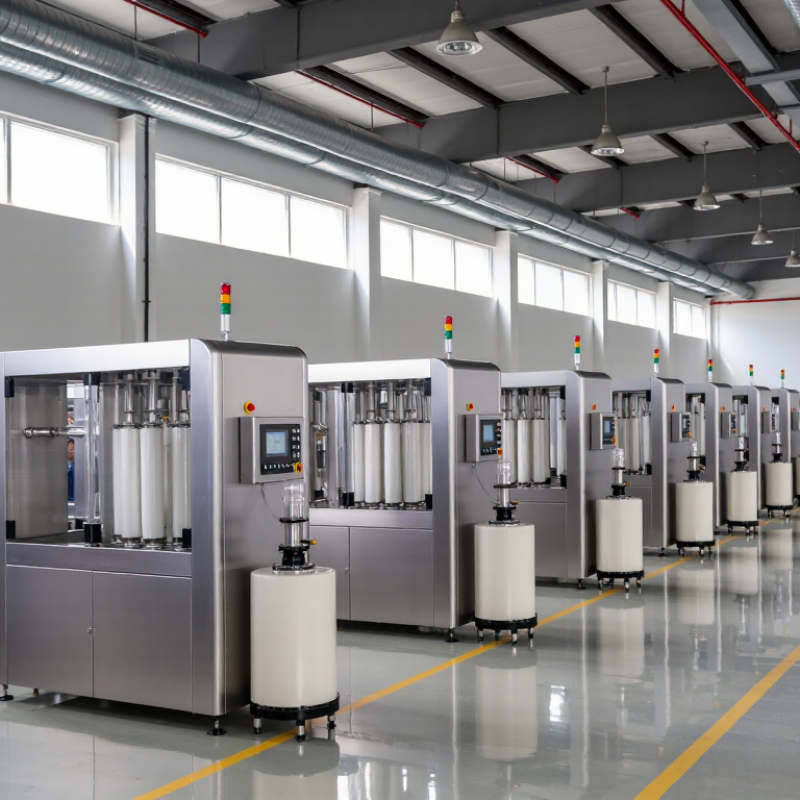
Viscose manufacturing uses a connected line of machines, and each stage affects the next. Pulp-opening equipment prepares cellulose sheets or rolls for processing. Steeping tanks soak the pulp in alkali, while presses control the liquid retained in the fibers. Shredders break the pressed material into crumbs, and aging chambers hold it under controlled conditions.
The details matter.
Xanthation vessels and dissolving tanks then help produce a uniform viscose solution, often called dope. Before spinning, filtration units remove undissolved particles, and deaeration tanks reduce trapped air that could disrupt the filaments. Spinning machines push the dope through fine spinnerets into a coagulation bath, where continuous filaments form.
Washing, stretching, and drying equipment then condition the fiber for winding or cutting. A neat process diagram can hide practical problems: uneven flow, difficult cleaning, or poor coordination between machines. When assessing equipment, manufacturers should examine process control, compatible capacities, maintenance access, and the support available for commissioning.
No single machine carries the whole line.
How to Assess Viscose Machinery Manufacturers
How to Assess Viscose Machinery Manufacturers
When assessing viscose machinery manufacturers, start with your production needs. Define the fiber specifications, expected output, available floor space, and utilities. Ask how the proposed line handles changes in pulp quality and operating conditions. Request process diagrams, equipment lists, and documented performance data. A clear answer should connect each machine to a measurable production requirement. Details matter. Compare quoted capacity with the conditions used in the supplier’s tests; the numbers may not reflect your plant exactly.
Examine materials, process controls, and maintenance access. Review how temperature, chemical circulation, and spinning conditions are monitored. Ask about commissioning, operator training, spare-part availability, and typical service response times. If possible, speak with current users of similar equipment and visit a running line. Look closely at pipe connections, control screens, and cleaning access. A polished presentation can hide awkward maintenance points. I would not judge a supplier from one visit alone; site conditions differ, and that is easy to overlook.
Tips: Bring a written checklist to technical meetings. Ask for test records, sample acceptance criteria, and a clear division of responsibilities. Confirm which parts are included in the offer and which are optional. Record unanswered questions, then verify them before signing. A modest, transparent capacity estimate is often more useful than a confident promise.
Profiles of Leading Viscose Machinery Manufacturers in China
China’s leading viscose machinery manufacturers tend to build expertise around different stages of fiber production. Some focus on spinning lines, while others supply equipment for dissolving, filtration, washing, or finishing. Their strengths differ. A useful profile looks beyond factory size and examines how well each supplier connects machines into a stable production line.
Experienced manufacturers often discuss practical details: spinneret-hole consistency, bath temperature control, filtration intervals, and the time needed to change a component. These details matter on the plant floor. A well-designed control panel can help operators spot pressure changes before they affect fiber quality. Some suppliers also provide installation guidance and operator training, though the depth of support can vary by project. Ask for clear service terms.
A credible manufacturer should explain its engineering choices and provide relevant project references, not just polished equipment photos. Check whether proposed output figures include the full line or only selected machines. This distinction is easy to miss. Factory visits, when possible, can reveal workshop organization and assembly practices. Still, one visit cannot prove long-term reliability; maintenance records and communication after delivery deserve equal attention. Some claims may sound precise, but actual performance depends on raw materials, process settings, and operator experience.
Comparing Manufacturers by Technology, Capacity, and Service
Who Are the Top Viscose Machinery Manufacturers in China?
China’s top viscose machinery manufacturers are best compared by process control, verified capacity, and dependable service. Textile Exchange’s Materials Market Report 2024 estimates that man-made cellulosic fiber production reached about 7.9 million tonnes in 2023, around 6% of global fiber output. This scale makes stable spinning and consistent fiber quality important. Numbers matter.
Technology checks should cover automation, process monitoring, energy use, and chemical recovery. For capacity, compare operating output and uptime at similar plants, not just nameplate figures. A high rated capacity can mislead; actual results depend on feedstock, maintenance, and operator skill. Ask for documented performance data, commissioning plans, and references from comparable production lines.
Tips: Request a clear spare-parts list, response times, and operator-training details before comparing quotations. Service can matter as much as equipment: delays in troubleshooting may leave a line idle. Some details remain difficult to verify remotely, so treat sales claims as starting points, not proof.