Top 10 Types of Coir Yarn Spinning Machines for Global Buyers
Choosing a coir yarn spinning machine is rarely a simple price comparison. Global buyers face different fiber qualities, labor conditions, power supplies, and production targets.
A machine that performs smoothly in Kerala may struggle in a dry inland factory. Husk moisture changes. Fiber length varies. Operators also make mistakes. These details affect yarn strength, twist consistency, waste, and maintenance costs. One overlooked bearing can stop an entire production line.
Coir machinery consultant Dr. K. R. Prasad observes, “The best machine is not the fastest one; it is the machine that fits the fiber, operator, and market.” This practical view matters when comparing equipment across regions. Buyers should examine feeding systems, spindle control, energy consumption, safety guards, spare-part access, and after-sales support.
This guide reviews ten types of coir yarn spinning machine used or considered by international buyers. The list includes manual-assisted, semi-automatic, automatic, wet-spinning, dry-spinning, single-yarn, and two-ply configurations. Each design serves a different production reality.
Some machines favor small workshops. Others require stable electricity, trained technicians, and larger floor space. A lower purchase price can become expensive through frequent downtime. A highly automated model may also disappoint when local skills are limited.
The comparison remains practical, not absolute. Specifications can change between manufacturers. Performance depends on fiber preparation, humidity, yarn count, and operator discipline. Buyers should test local coir samples before placing large orders. That step is easy to skip. It should not be.
Coir Yarn Spinning Machines: Definition, Purpose, and Basic Structure
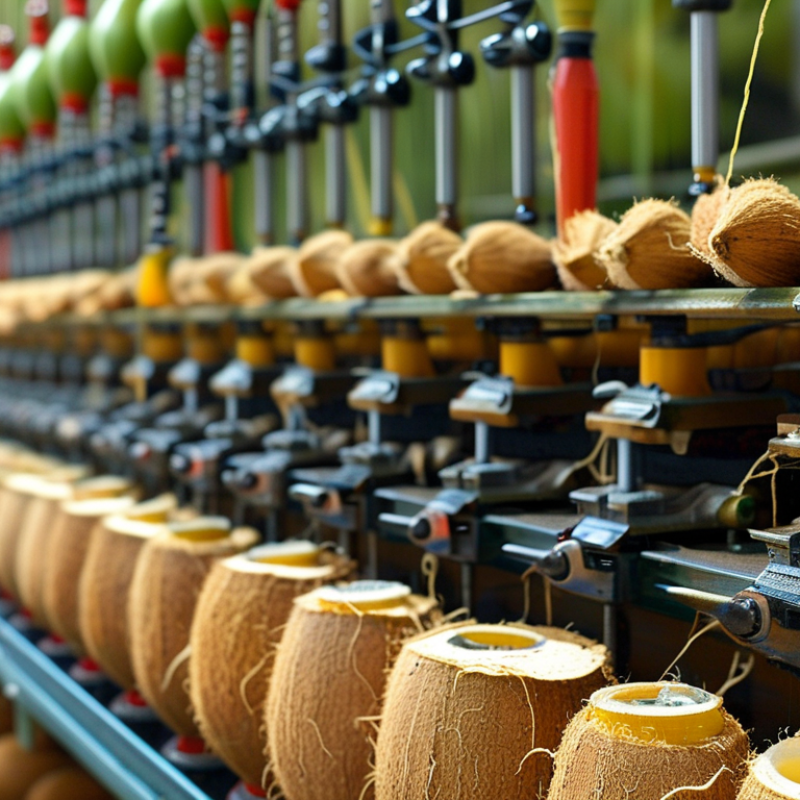
Coir yarn spinning machines convert prepared coconut fibre into continuous yarn for mats, ropes, brushes, geotextiles, and erosion-control products. The process usually includes fibre feeding, opening, drafting, twisting, and winding. Some machines handle single-ply yarn, while others produce stronger multi-ply yarn through additional twisting.
Their main purpose is consistency. Controlled tension helps maintain yarn diameter and reduces weak sections. Adjustable spindle speed also supports different fibre lengths and moisture levels. A typical machine includes a feed hopper, fibre guides, drafting rollers, spinning spindles, drive motors, and collection units. Safety guards and emergency stops are essential, not optional.
Machine categories often include manual, semi-automatic, fully automatic, single-spindle, multi-spindle, and integrated spinning systems. The right choice depends on fibre preparation, target yarn size, labour availability, and expected output. In practical assessments, buyers should inspect roller alignment and test yarn tension under real operating conditions. A clean machine may still perform poorly if the fibre is unevenly dried.
Specifications can mislead. Higher spindle speed does not always produce better yarn. Excessive speed may increase breakage, dust, and operator adjustments. Maintenance access matters too. If cleaning takes too long, production losses quietly grow. Buyers should request trial results, power requirements, spare-part details, and training arrangements before comparing prices. Test the yarn by touch and tension. Numbers alone are not enough.
| No. | Machine Type | Primary Process Stage | Typical Configuration | Typical Yarn or Product | Indicative Capacity | Main Advantages | Key Purchasing Considerations |
|---|---|---|---|---|---|---|---|
| 1 | Manual Coir Spinning Wheel | Spinning | One operator; hand-driven wheel with a spindle and yarn guide | Fine to medium coir yarn for household articles, mats, and small craft production | Approximately 3–8 kg per operator per day, depending on fiber quality and yarn thickness | Very low investment, simple maintenance, and suitable for village-level production | Requires skilled labor; output and yarn uniformity depend strongly on operator technique |
| 2 | Motorized Single-Spindle Spinning Machine | Spinning | One spindle driven by an electric motor with manual fiber feeding | General-purpose two-ply or single-ply coir yarn | Approximately 8–20 kg per 8-hour shift | More consistent spindle speed and lower physical effort than hand spinning | Check motor voltage, belt protection, spindle alignment, and availability of replacement parts |
| 3 | Semi-Automatic Multi-Spindle Spinning Machine | Spinning | Several spindles on one frame; manual sliver or fiber feeding with centralized drive | Medium-volume coir yarn for mats, brushes, geotextiles, and general cordage | Approximately 25–80 kg per 8-hour shift, depending on spindle count and yarn size | Good balance between investment cost, labor use, and production volume | Evaluate the number of active spindles, operator-to-machine ratio, twist adjustment, and dust control |
| 4 | Automatic Multi-Spindle Coir Spinning Machine | Spinning | Multiple powered spindles with guided feeding, tension control, and automatic or assisted doffing | Uniform single-ply and plied yarn for continuous commercial production | Approximately 80–250 kg per 8-hour shift, subject to fiber preparation and machine design | Higher productivity, repeatable twist, and reduced manual handling | Requires stable power, trained maintenance staff, well-prepared fiber, and adequate factory space |
| 5 | Ring-Type Coir Spinning Machine | Spinning and twisting | Spindle, traveler, and ring assembly forming yarn through controlled winding and twist insertion | More regular coir yarn for woven mats, floor coverings, and textile-like products | Commonly configured for several spindles; practical output varies widely with yarn count and fiber length | Good control of twist and package formation when the fiber is sufficiently uniform | Requires careful traveler and ring selection; very short or highly irregular fibers may reduce efficiency |
| 6 | Flyer-Type Coir Spinning Machine | Spinning and package formation | A rotating flyer guides and twists the fiber while building a bobbin package | Relatively coarse yarn, rope yarn, and products requiring controlled low-to-medium tension | Typically selected for low-speed, high-torque operation rather than maximum spindle speed | Suitable for bulky natural fibers and comparatively coarse yarn structures | Confirm flyer balance, bobbin dimensions, twist range, guarding, and compatibility with the prepared coir sliver |
| 7 | Double-Twist Coir Yarn Machine | Plying and twisting | Two or more yarn ends receive twist during one rotation cycle to form stronger plied yarn | Two-ply or three-ply yarn for mats, ropes, nets, and erosion-control products | Approximately 30–150 kg per 8-hour shift, depending on yarn diameter and number of ends | Higher production efficiency than separate single-twist and plying operations | Check maximum package size, twist direction, tension control, and suitability for coarse natural yarn |
| 8 | Rope and Cordage Twisting Machine | Final twisting and rope forming | Multiple yarn carriers or strands combined into larger cords, ropes, or twisted bundles | Coir rope, garden cord, marine-style cordage, and erosion-control rope | Output is normally specified by rope diameter and length per hour rather than only by kilograms | Produces larger, stronger, and more stable rope structures from spun yarn | Specify strand count, rope diameter, lay length, take-up system, and required tensile strength |
| 9 | Wet-Coir Spinning or Wet-Twisting Machine | Moisture-assisted spinning or twisting | Fiber or yarn is processed with controlled moisture to improve cohesion and reduce loose fiber | Dense, smoother yarn for selected mats, brushes, and specialty cordage | Capacity depends on moisture level, drying arrangement, yarn size, and downstream handling | Can improve cohesion and surface compactness for appropriate coir grades | Requires water management, corrosion-resistant parts, controlled drying, and wastewater planning |
| 10 | Spinning-and-Winding Integrated Line | Spinning, twisting, and winding | Connected modules for fiber feeding, yarn formation, tension control, and package winding | Cones, cheeses, or other uniform packages for automated weaving and further conversion | Designed for continuous production; actual capacity is determined by the slowest process module | Reduces intermediate handling and improves package consistency for export-oriented production | Review line synchronization, sensor functions, spare modules, compressed-air needs, and total installed power |
Related Posts
-
How to Use a Coir Spinning Machine for Efficient Fiber Production?
-

Coir Yarn Spinning Machine Top Tips for Global Buyers
-
Best Tips for Using a Small Wool Spinning Machine?
-
Unlocking the Art of Weaving: How Spinning Wool into Yarn Machines Transform Craftsmanship
-
2026 Best Coir Yarn Spinning Machine for Global Buyers?
-
How to Choose Open End Spinning Machines in 2026?